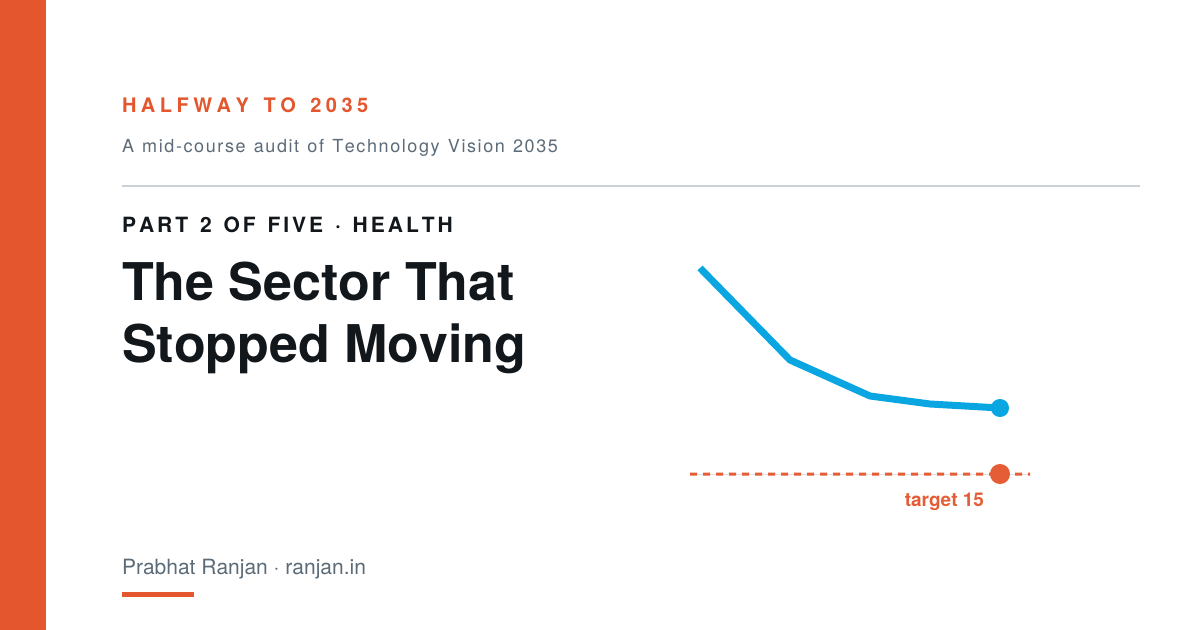
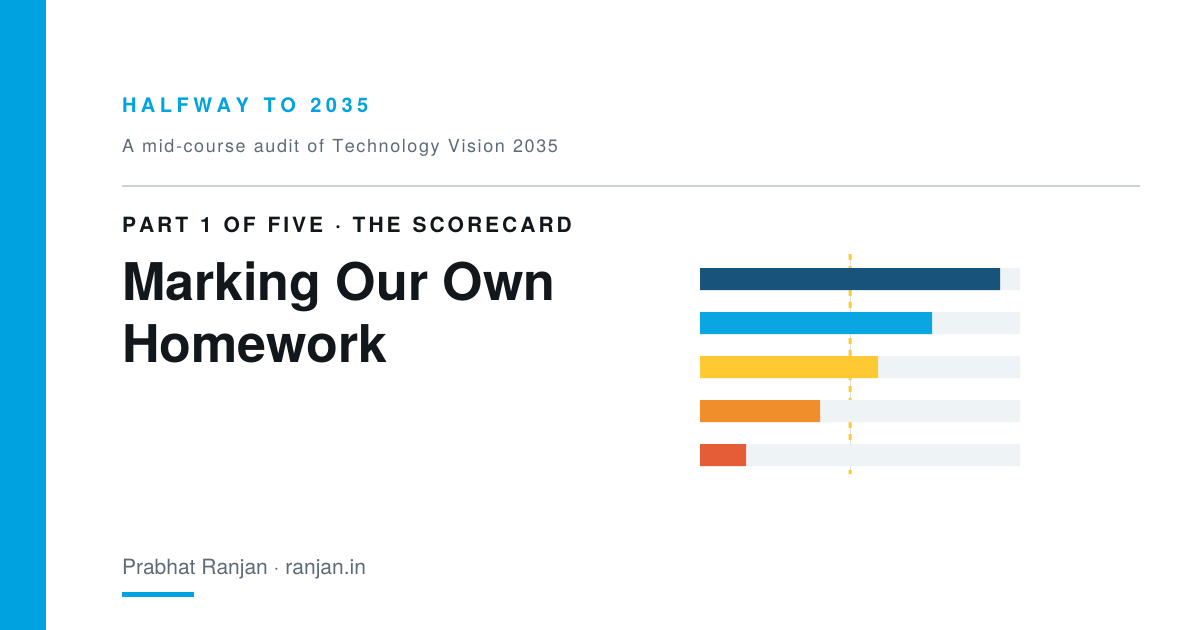
The Sector That Stopped Moving
The medical sciences roadmap was the most quantitatively explicit of the twelve. That is to its credit, and it is why the sector can be graded harder than any other.
Prof. Prabhat Ranjan CEO and Co-founder of a nuclear fusion company called ASPL Fusion. He is former Vice Chancellor of D Y Patil International University, Akurdi, Pune

The medical sciences roadmap was the most quantitatively explicit of the twelve. That is to its credit, and it is why the sector can be graded harder than any other.
Technology Vision 2035 named twelve prerogatives, ten Grand Challenges and hard figures with a date attached. Ten years and seven months of the twenty are gone.
This is the audit, done in public, against our own numbers.
Excerpts from book Chapter “Emerging and Disruptive Technologies” – Authored by Prof Prabhat Ranjan,
Book – “Strategic Challenges : India in 2030” – Edited by Jayadeva Ranade, Published by HarperCollins India in September 2022
Emerging and disruptive technologies are reshaping modern security frameworks and warfare strategies. These innovations, ranging from artificial intelligence (AI) to hypersonic missiles, hold the potential to redefine national defense mechanisms, economic policies, and international diplomacy. This detailed analysis explores the scope, challenges, and implications of these technologies, particularly from an Indian perspective.
Continue reading ““Emerging and Disruptive Technologies” – Strategic Challenges : India in 2030”Prof Prabhat Ranjan has been identified by Outlook Magazine as one of the visionaries to take India towards a $ 5 Trillion economy
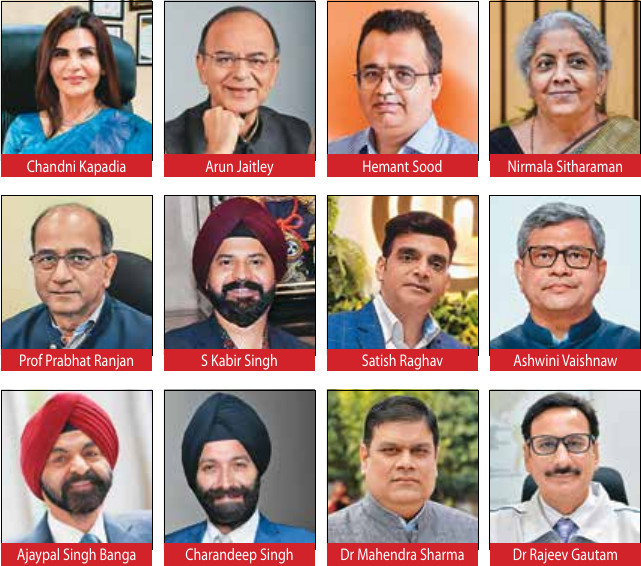
The International Monetary Fund (IMF) has projected India to become a $5 trillion economy with the third largest GDP in 2027-28, early in the ‘Amrit Kaal’ on the path to achieving the goal of becoming an advanced economy by 2047. “Outlook” magazine has tried to identify “visionaries” of India under whose guidance, India is moving towards achieving this goal in a special anniversary edition.
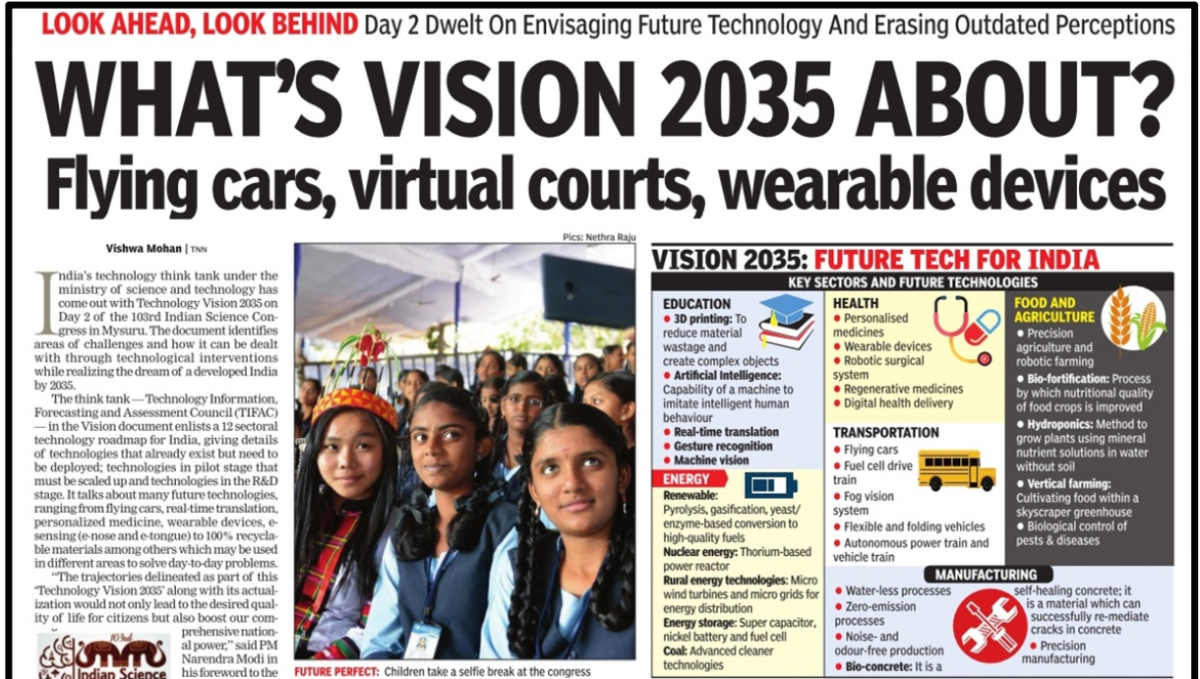
Continue reading “Prof Prabhat Ranjan Listed Among “Visionaries of India” by Outlook Magazine”The study of the impact of the Technology Vision 2035 document is an ongoing process and based on this mid-course correction in strategy is important for the country to move ahead. We have seen good action and progress in certain areas e.g. Waterways. However healthcare sector is still lagging and going by the current trend, we would not achieve the targets set by TV2035. Frequently, authorities responsible for these set a lower target for themselves that does not require a major effort!
After Hon’ble PM launched Technology Vision 2035 on the morning of Jan 3, 2016 (See my blog Making and Launching of Technology Vision 2035), our focus shifted to its impact on the future of India. In that blog, I mentioned that “In the very first meeting on TV2035, I emphasized the importance of being able to communicate the document among citizens at large and policymakers, in particular. I mentioned multiple means of communication that are relevant today: (1) Print Media (2) Electronic Media (3) Social Media (4) the Internet (5) Workshops etc. Each one of these needed their own way of providing information from the document.”
Continue reading “Technology Vision 2035: Post Launch Activities and Impact”Finally effort to create a digital fabrication movement is sweeping across the country with the AICTE IDEA Lab network growing. This would have profound effect on the innovation landscape of the country as well as manufacturing sector and growth of GDP and move India towards “Aatmanirbhar Bharat”
While preparing Technology Vision 2035, after joining TIFAC as its head in April 2013, we started tracking various technologies that were likely to impact us in the coming decades. I have described these aspects in detail in my blog Making and Launching of Technology Vision 2035. Among the many technologies that were on the horizon, we had 3D printing (also known as additive manufacturing). This was also covered widely in the Manufacturing Sector Roadmap of Technology Vision 2035. I was aware of this and of FabLab initiative from MIT. 3D printing and other digital fabrication technologies were revolutionizing prototype development as well as customized manufacturing. The cost of setting up labs of this kind was around Rs 50 Lakhs at that time. Due to lack of awareness and cost, very few places in India were setting up such facilities. Most of the educational institutes were not aware of these developments nor were these part of the curriculum. Even those places (one could count them on fingers) were mostly setting it up for projects and special facilities, not for the part of regular training of students as part of the curriculum. From my project funding, I had procured a PCB milling machine to reduce the time to make PCBs. This made it easier for students to indulge in hardware development.

in 2020, I turned 60 years, which set my clock back to zero and new innings started. On this occasion, my University organized a set of live discussions from June 3 to June 8, 2020 covering my life from childhood to current days involving persons who knew me closely during that phase of life.
in 2020, I turned 60 years, which set my clock back to zero and new innings started. On this occasion, my University organized a set of live discussions from June 3 to June 8, 2020 covering my life from childhood to current days involving persons who knew me closely during that phase of life. I am sharing video links from that series here:
https://youtu.be/OjIKJLJ0IpQ – Social media Promotion Video
https://youtu.be/fcSCWAzylgI – a set of photographs from different stages
June 3, 2020 – (part 1 of 6) – Early Childhood, Education
June 4, 2020 – (part 2 of 6) – Education at Netarhat, IIT Kharagpur, Delhi Univ, Univ of California Berkeley
June 6, 2020 – (Part 4 of 6): Disability Sector, Moon Mission, Wildlife tracking
June 7, 2020 – (Part 5 of 6) – TIFAC, Technology Vision 2035, KIRAN IPR
June 8, 2020 – (Part 6 of 6) – D Y Patil International Univ, Akurdi, Pune and Holistic Health Experience