
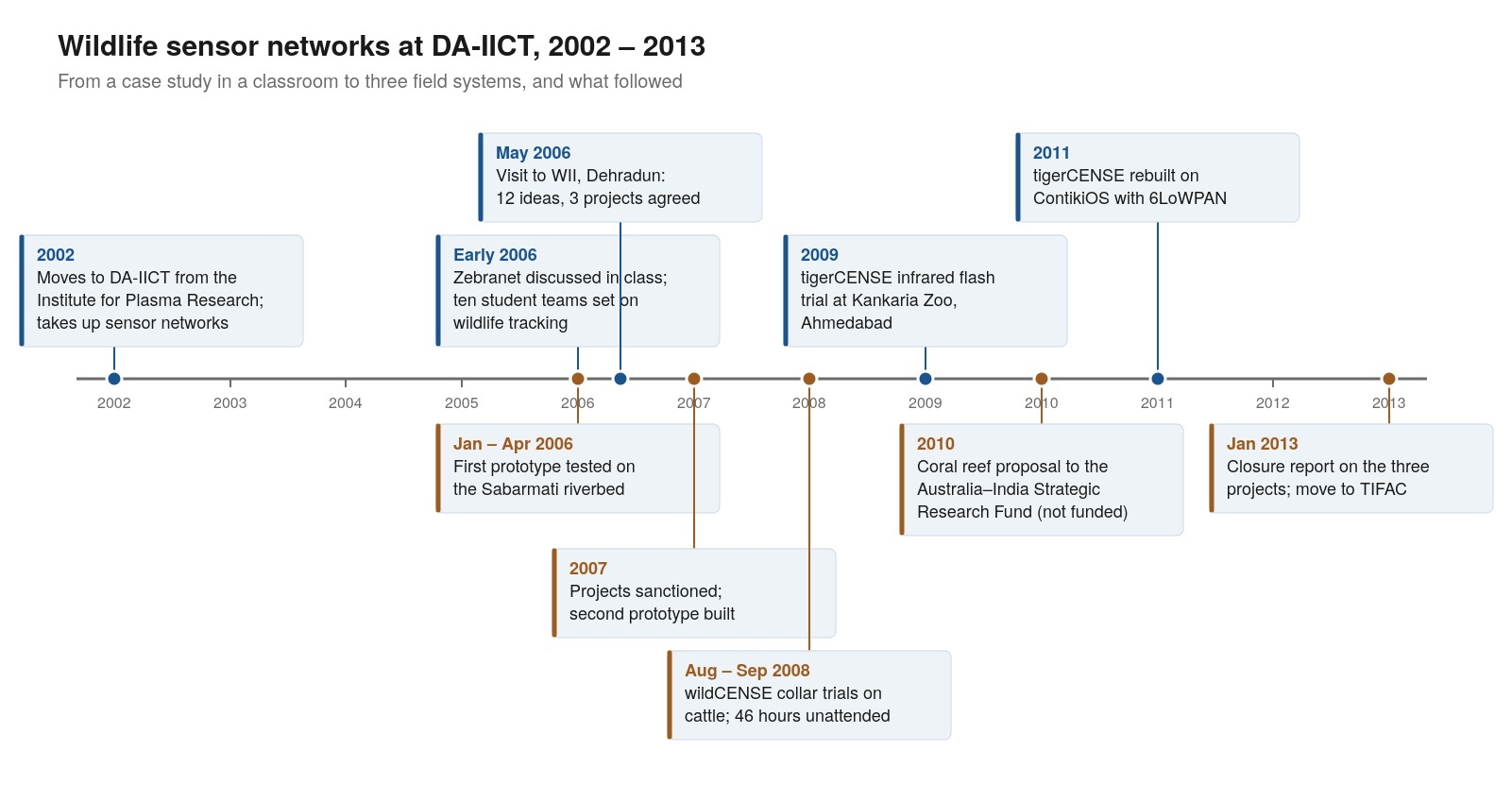
I moved to Dhirubhai Ambani Institute of Information and Communication Technology (DA-IICT), Gandhinagar in 2002 from the Institute for Plasma Research, Gandhinagar as a Professor. I started developing a new area of research while still trying to continue to work on Nuclear Fusion. Given the nature of courses in DA-IICT, I started to look at robotics as an area that could also be used for remote handling needs in a fusion reactor. As I started looking at published research work in robotics, I got interested in the concept of a Group of Robots that could communicate with each other and synchronize a task that was not possible by an individual robot. From here I eventually landed up in the area of Wireless Sensor Networks (WSN) which was in the early stages of development at that time.
As DA-IICT was also in its infancy, I planned out a strategy to develop a sequence of courses that would prepare students to participate in WSN-related work in the coming years. These courses started from Master’s level and slowly moved to UG level. Eventually, they stabilized as Embedded Hardware Design (EHD), Embedded Systems Programming (ESP), Sensor Network Devices (SND), and Sensor Network Systems (SNS).
I used to always start teaching a course with a few case studies to motivate the students toward certain application areas that were already possible or may become possible in the future. In 2006, as I was teaching a Sensor Network course, I discussed two examples in detail where the concept of WSN was used. One of these was the Great Duck Island (GDI) project of Berkeley and the other one was the Zebranet project of Princeton.
While going through the Zebranet project, I realized that the team working on the project had nearly zero experience with this kind of project. That triggered a thought in my mind – if they can start from zero why can’t we do it too and take up similar projects? As most of my courses required students to do projects, I asked 10 teams to take up projects related to wildlife tracking. With my experience, I knew that only 3-4 teams would do some serious work but that would create enough base to discuss with real users.
After this, I decided to get in touch with wildlife experts. I visited nearby Indroda Nature Park (only 2 km away from campus) and met its Director and explained to him the kind of work WSN could do for wildlife research. I did not see much enthusiasm in him and returned back. After a couple of days, one wildlife expert, Dr. Bharat Jethwa, came to meet me. He told me that as he was waiting in the office and overheard some of my conversations with the Director saw a lot of potential in the technology. He informed me that he had done Ph.D. from the premier Wildlife Institute of India, Dehradun and he would put me in touch with a Senior Scientist, who would be very excited about such possibilities.
In the middle of May 2006 I visited the Wildlife Institute of India, Dehradun, and gave a talk to some of the scientists. After my talk about possibility of WSN in wildlife research, I invited questions/comments. Mostly what I was hearing were incremental changes to what they were already doing and no new possibilities were emerging. At this point, I made a statement – “Imagine that God has given you all the power and think of what information you would want to help you in your research work. Do not worry about how you would get such an information. Please leave that to me.”
This statement was a turning point. Everyone opened up and they came up with 12 different project ideas. One of the scientist was already in touch with me for trying to monitor Sea Turtles. Finally after discussing with Director, WII, we narrowed down to 3 projects. These projects were covering different animal groups requiring development of different types of technologies.
Three projects, three completely different problems
The three projects we settled on were chosen precisely because they did not overlap. Each one had a different animal, a different constraint and, therefore, a different technology:
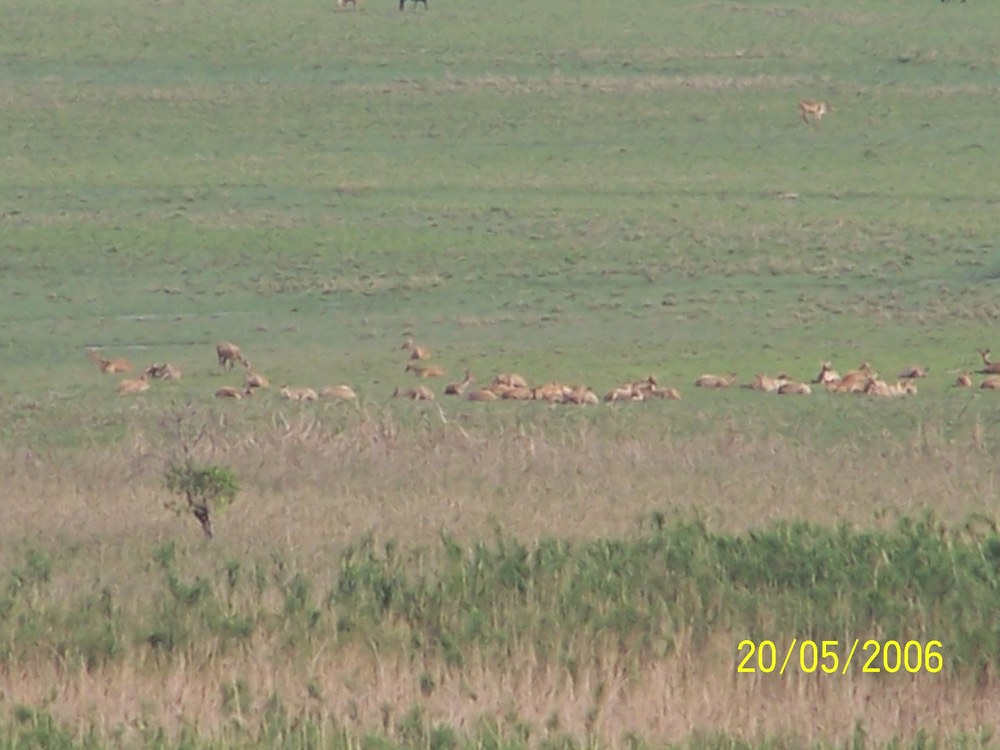
1. A GPS based collar for medium to large animals, to record migration, activity and the micro-climate through which the animal moves. The final target species was the Barasingha (Swamp Deer), whose migratory path across the Uttarakhand-Nepal region was then unknown. First trials were planned on Rhesus Macaques within the WII campus. We called this system wildCENSE.
2. A system to track small hill turtles inside the WII campus, where GPS could not be used at all. This became turtleCENSE.
3. An image sensor network to photograph tigers moving along their trails, without disturbing them and without anyone having to walk into the forest to collect the film. This became tigerCENSE.
It is worth setting the dates down plainly, because they explain why the conversation went as well as it did. The riverbed trials ran from January to April 2006; the three projects with WII were sanctioned and ran from 2007 to 2009. By the time we sat down to agree on what would be built, we were not describing a possibility – we had already carried a working prototype across a few kilometres of open ground and knew, in some detail, what it could and could not do. WII supported all three as collaborative research, with financial support as well as domain expertise. I must record my gratitude to Mr. P. R. Sinha (Director, WII) and Dr. V. B. Mathur (Dean) for clearing things quickly, and to Dr. S. P. Goyal, Dr. Bivash Pandav, Mr. Qamar Qureshi and Dr. K. Sankar, with whom I had long discussions during my visits to Dehradun. Dr. Bharat Jethwa of GEER Foundation, Gandhinagar, who had opened the door in the first place, remained available throughout. Chris Sadler of the Zebranet team was generous in sharing what had and had not worked for them. Device development at our end was done along with Prof. Rahul Dubey, our research engineers and lab staff, and a long line of B.Tech. and M.Tech. students.
The first prototype, and the Sabarmati riverbed
Long before any of this became a proper board, it was a hand-wired prototype sitting in a plastic box – a micro-controller, an XBee radio, a GPS receiver with its antenna on a lead, a few sensors and a battery. Between January and April 2006 we took it out of the laboratory and tested it, first around the DA-IICT campus and then on the bed of the Sabarmati river.

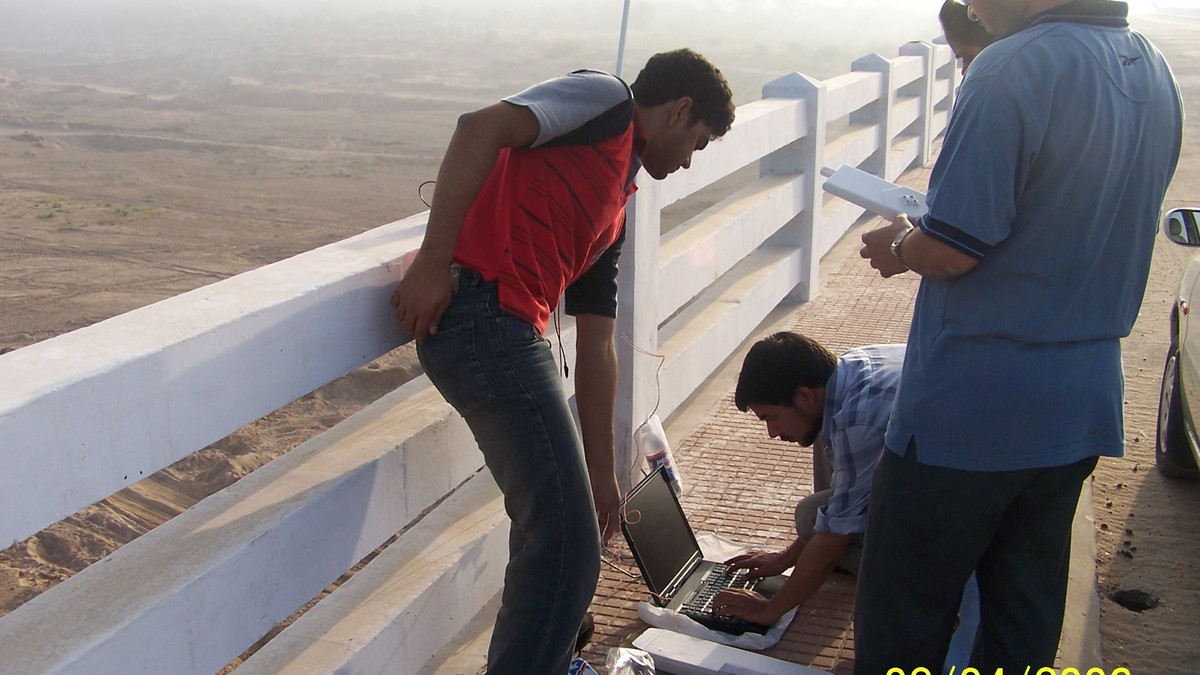
The riverbed was, for our purposes, a laboratory we did not have to build. It is a wide, flat, open expanse a few minutes from the campus, with very little on it and almost nobody in it, which is a fair approximation of the terrain a collared animal moves over and something one cannot reproduce indoors at any price. A bridge crosses it, and that gave us an elevated fixed point for the base station. So we would set up a laptop on the bridge, and then send students walking out across the sand carrying the node, further and further away, to find out what the radio actually did as against what the datasheet promised, how long the GPS took to get a fix in the open, and what happened to a link as the node went down into the riverbed and out of clear line of sight.
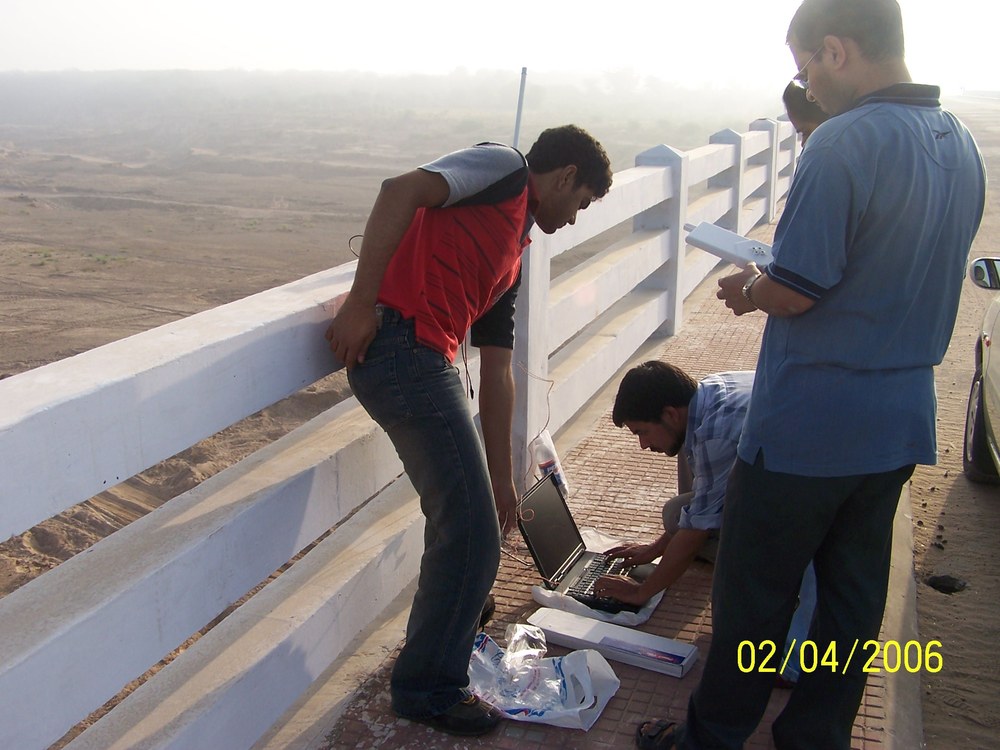
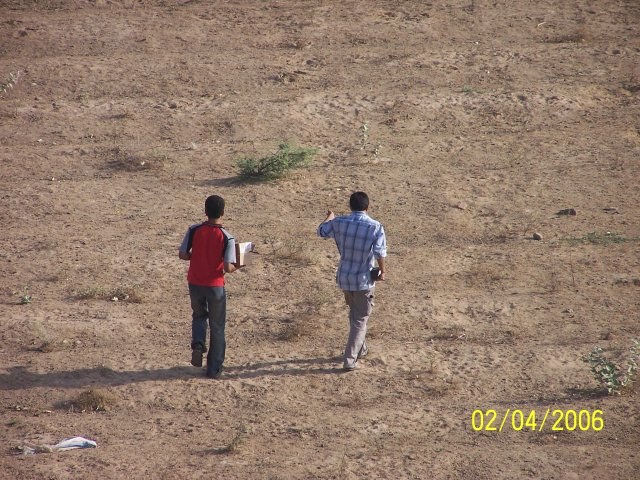
A great many of our assumptions were corrected on those afternoons rather than in the laboratory. Almost everything we later designed around – keeping the antenna up and clear, taking the GPS fix in short bursts instead of leaving the receiver on, storing data locally and transmitting only when a link presented itself – came out of watching the thing fail in the open in April heat. And when we plotted the collected points on a satellite map afterwards, it was the first time we saw our own data in the shape a wildlife researcher would eventually see it.

A second prototype followed in 2007, with a GPS module drawing roughly a tenth of the power of the earlier one, and went through the same routine around the campus. The lineage over those three years is easy to state: a node on a breadboard, then an ATmega324p on a hand-soldered board that could survive being carried about, and finally an ATmega1281 on a proper printed circuit board, 5 x 6 cm and 35 grams without its battery. Only at that point did we have something that could reasonably be put on an animal.
That is where this account should pause, because it is where the work stopped being ours alone. In the next part I take the three projects one at a time – a collar that goes on a deer, a camera that photographs a tiger without disturbing it, and a turtle too small to carry a GPS receiver – and describe what was built, what worked, and what did not.