

[ This blog tries to summarize my research journey from Universe to Sun to Moon to Earth to Body to Brain. Some of this is covered in a talk I gave at IIASA, Vienna – https://youtu.be/327A01oYqdo ]
As a child, I was very quiet but observant. I would be watching my elder brother, Vijoy Prakash Jee, being taught and learned silently. I would not speak much or write but would read. However, I would not be serious just before exams but take it easy by reading magazines etc. In 1970, at age of 10, I topped the prestigious Netarhat School Entrance Exam in the State of Bihar. I had an interest in photography from an early age and it was more on its technical part than the composition skills e.g. how to take photographs in a dark room using a table lamp with no flash!

While studying in Netarhat School, at an early age, I developed an interest in scientific research. I was good in Mathematics and Science but poor in languages. During my school days, I started reading many books of mathematics and Physics. I got specially interested in Mathematical Puzzles and Fallacies. I also had the chance to go through a book on “Vedic Mathematics” and learned some of the tricks of speedy calculations. While I was in class 9th, I developed an interest in Elementary Particles and wanted to do research in Particle Physics.
In 1976, I appeared for IIT JEE and got a reasonably good rank without any preparation other than skimming through a guidebook for question patterns. I opted to take Physics at IIT Kharagpur, though initially the counseling team admitted me in Electrical with the promise of changing to Physics, if I so desired later! I had also appeared for the National Science Talent Search Examination conducted by NCERT and got selected for the National award (Rs 150/250/600 pm in BSc/MSc/PhD – It was sufficient to meet the expenses those days). My project was to measure convection current speed in liquids of different viscosity and make a mathematical model. I used a model to predict this speed in tubes of different cross-sections. I had to use calculus and hydrodynamics to do this.
I topped my 3 Yrs B.Sc.(Physics) at Kharagpur and moved to Delhi University due to a larger number of specializations being offered in Physics(probably 23 of them) to complete my Masters. Here I specialized in the area of Astrophysics and Relativity. I worked with Dr J V Narlikar in summer of 1981 at TIFR as part of NSTS summer camp on black holes.
I had applied to a few US universities to obtain a PhD degree in Physics. My statement of purpose(SOP) was based on my interest in Astrophysics and Relativity focusing on “Universe”. I got admission to the world’s top rated University in Physics – University of California, Berkeley, with a fellowship of about US$ 800 per month along with travel support of US$ 400. However, something interesting happened on the night of departure to the USA. One of my maternal uncles, who had come to see me off, asked me about what research area I am going to focus on. A thought crossed my mind at that time. I felt that working on Universe was not going to be useful to India and replied to him that either I would work on “Nuclear Fusion” or “Space Technology”. Please read my blog about this – How I got into Nuclear Fusion Research
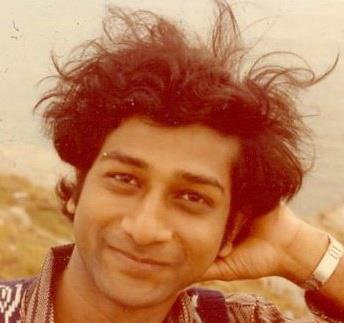
After going to the USA, I did research in the area of Nuclear Fusion and developed a new concept of Nuclear Fusion reactor using modeling and simulation, I used to work on the fastest supercomputers of the world – Cray-1 and 2 but all remotely. I have had an interest in computers since IIT days and spent a lot of time doing non-research-related developments on computers such as developing Hindi writing and speaking capability. As the Sun produces its energy through the Nuclear Fusion process, I effectively moved from “Universe” to “Sun”.
https://www.indiascience.in/videos/fusion-power-h
After completing my PhD on designing THELMA (Triangular HElically Linked Mirror Arrangement), I immediately returned to India in 1986 to participate in the nascent stage of Nuclear Fusion research in India. Activities were started at two places in India in the early 80s – An Institute for Plasma Research(IPR) was set up in Gandhinagar, Gujarat as the main Nuclear Fusion research center of the country headed by Prof P K Kaw, a world-renowned Plasma Physicist and as a Hot Plasma Project in Saha Institute of Nuclear Physics(SINP), Kolkata(Originally set up by Dr Meghnad Saha, whose “Ionization Equation” became one of the key pillars of Plasma Physics).
SINP opted to have a type of Nuclear Fusion reactor fabricated by Toshiba of Japan called Tokamak(a Russian invention). This was delivered around April 1987. Two Japanese engineers came along to set up the machine. I had brought a Personal Computer along with me while returning from the USA. As there were no computers in SINP at that time, I also tried setting up a Computer facility in SINP and was successful in getting two Unix-based computers connected by Ethernet, set up in Salt Lake campus. I started porting a Tokamak simulation code BALDUR (about 60,000 lines running on Cray) to this computer.

I also started developing a Data Acquisition system based on PC to acquire data in digital form from Tokamak – among the earliest efforts of this kind in India. (See How Japanese got hooked on to Indian technology!). As this system got integrated with the machine, I started to closely watch the initial set of machine performance tests etc. In parallel, I started to try to model the discharge behavior but was never coming close to what was being seen experimentally. Then I wrote a simple program in about 500-600 lines to model the behavior. It was suggesting that there may be a lot of impurities inside the machine. It needed a discharge cleaning system to clean the impurities. I asked the experimentalist if they can set up this system. They said that it would take 3-4 years to do it since they need to import some components for this purpose. Then I decided to develop this system myself and only use components available in India. For this, I had to come up with a completely new design and not only it worked but also improved the performance of the machine to International standards. After this, I developed more systems to prolong the plasma and improve its quality. All this was done around 1989-93. Please read my blog: How I became Accidental Experimentalist !
I was invited to shift to Gandhinagar to participate in the new Superconducting Tokamak(SST-1) project and moved there in Aug 1995. I was requested to share my time working on the existing Tokamak, ADITYA as well as SST-1. ADITYA was not performing well for the last six years(1989-95) in spite of tremendous efforts put by experts from across the world. After about three months of joining, I got an opportunity to make modifications in the operational aspects of the machine. I was lucky that I could get substantially improved performance in about five days! See my blog 5 Days Miracle in Nuclear Fusion Reactor(ADITYA Tokamak) about this miracle. After a few weeks, I was made Project leader of ADITYA and also of SST-1 Operation and Control Group. I had to deal with many challenges of ADITYA and had to come up with innovative solutions to make it reach higher and higher performance as well as solve many perplexing issues to make it function smoothly. For those interested in knowing details of these, I have added more blogs describing these and they are summarised at : My Contribution to Nuclear Fusion Technology
I also designed Real-time control of SST-1 based on digital technology that has been followed in the upcoming international project ITER in France.

In 2002, I moved as Professor to Dhirubhai Ambani Institute of ICT(DA-IICT) in Gandhinagar as Professor to work with young students and participate in other areas of research, which a University environment provides. Around 2007, I got involved with the Chandrayaan-II mission and my journey moved from “Sun” to “Moon”! In 2009, I received project funding to detect water on the moon using the Sensor network in the Permanently Shadowed Region of Moon. As mission plans changed, I received a request from Chandrayaan-II mission director to design a single system with multiple functions to explore the lunar surface and subsurface, which I did and named it – LuSSeX (Lunar Surface and Subsurface Explorer). Please read my blog : My Tryst with Chandrayaan-2

At DA-IICT itself, I also started to explore the use of Sensor networks for different applications. These included agriculture as well as wildlife tracking. With funding from the Wildlife Institute of India, Dehradun, I worked on tracking four different kinds of animals – Tiger, Swamp Deer, Hill Turtle, and Purple Frog. Thus my journey carried me from “Moon” to “Earth”!
I also got involved with the development of assistive technologies to help persons with severe disabilities. This included those having restricted finger movements to help them control appliances/computers in the room called “Environment Control System”. We also used voice as well as body part movements such as head or leg. This moved me to “Body” from “Earth”.
Some of this work is described in my blogs too covering assistive technologies:http://ranjan.in/topics/research-experiences/assistive-technology/
I have shared on YouTube a talk given on National Science Day in 2017 covering my work in the area of assistive technologies. Here is the video :

To help those in the “Locked in” condition, I developed a Brain-Computer Interface(BCI) based environment control system. I have also made an effort to help persons in “Vegetative State” though it has not been successful so far. I have been further exploring the use of BCI to identify the concentration levels of children to help improve their learning capabilities. Now I am working to use BCI to help identify multiple intelligences among children to guide their career choices as well as learning styles. Furthermore, some of my effort to use naturopathic techniques to improve my health condition has also helped those with mental and other health challenges. And my research journey brought me to “Brain”!
Please read my blogs related to brain – http://ranjan.in/topics/brain/
The journey described above has not exactly been in the order mentioned but it was interweaved and has been very satisfying. Details of many of these have been penned down by me in my blog “ranjan.in”.
[PS: I had posted this blog on Oct 10, 2020. At that time I had no idea that suddenly I would get involved in various research projects with global impact and global support. It was only about 20 days later that I received a request from Dr Akash Singh, an inventor as well as an investor based in Silicon Valley, to initiate a Nuclear Fusion project to which I agreed after discussions. This project called Project Sanlayan was announced at 8th Bihar Science Conference on Dec 3, 2020. See the video recording of the talk at Nuclear Fusion in India : Past, Present and Future. Furthermore, he also agreed to support work on solving Chronic Health Problems based on my thoughts (see my discussion on this in My thoughts on healthcare and wellness). Both of these projects have taken off now. Discussion on many more projects are on, e.g. Helping farmers with remote sensing, reversible geoengineering for stopping global warming, assistive technology to help with neurodisability and neurorehabilitation etc.]
This blog mostly covered my research journey till 2013 or so. I moved to head India’s Technology Think Tank, TIFAC (Technology Information, Forecasting and Assessment Council), Delhi on April 25, 2013. Among many tasks carried out here, we developed Technology Vision 2035 for India. Details of some of the work done here is given at Making and Launching of Technology Vision 2035 and Technology Vision 2035: Post Launch Activities and Impact
On April 25, 2018, I moved as Founder Vice Chancellor of newly formed D Y Patil International University, Akurdi, Pune. A blog describes some of the achievements at this University – 6 Years at D Y Patil International University, Akurdi, Pune(DYPIU)